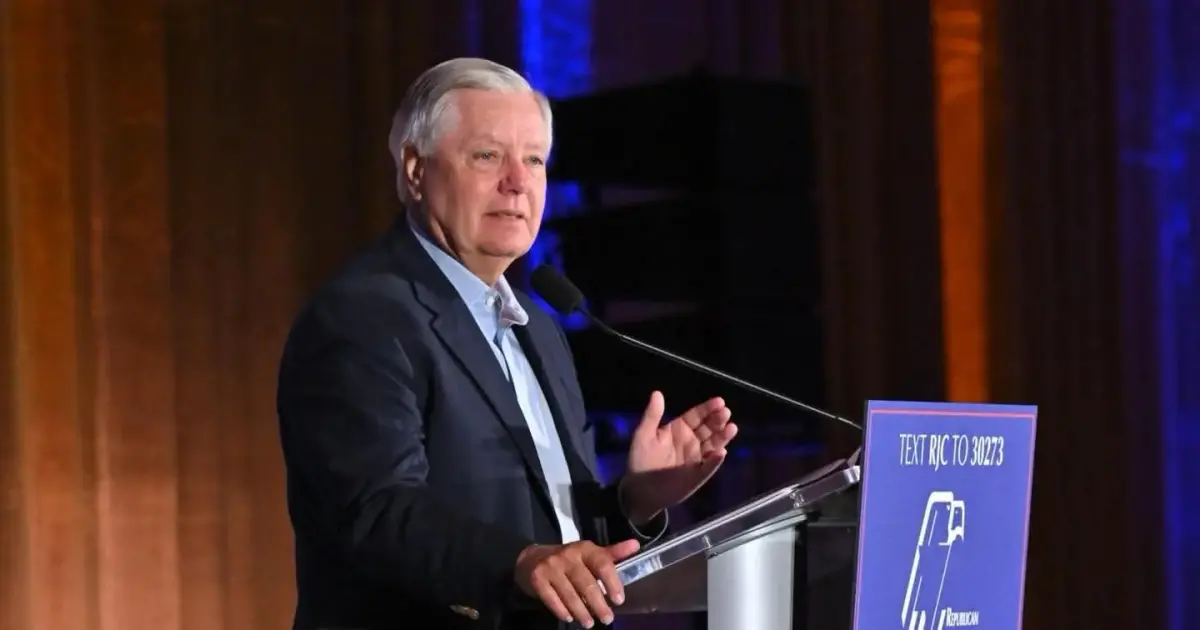
United States Senator Lindsey Graham (R-SC) passed away on the evening of Saturday, 11 July 2026, at the age of 71. His office announced the news early Sunday morning, citing a brief and sudden illness. Emergency services were reportedly dispatched to his Capitol Hill residence on Saturday evening following a report of cardiac arrest.
The passing of the long-serving Republican, who was in the midst of a campaign for a fifth term, marks the end of a career that was as influential as it was deeply divisive. While his allies remember him as a steadfast patriot, his detractors point to a legacy characterised by political opportunism and a relentless, hawkish interventionism that often disregarded humanitarian concerns.
Political expediency and the Trump transformation
Perhaps the most frequently cited criticism of Graham's political character was his radical shift in stance toward Donald Trump. During the 2016 Republican primary, Graham was one of Trump's most vociferous critics, at one point questioning his mental fitness and stating that the party was going backward under his influence. Following Trump's election, Graham underwent a total reversal, becoming one of the president's closest advisors and a regular golf partner.
This shift led many in the media and political circles to view him as an opportunist who prioritised proximity to power over long-held ideological convictions. His eventual attempt to distance himself following the 6 January 2021, Capitol riot was seen by many, even within his own party, as a gesture that failed to resolve the perception of his political opportunism.
Militarism and the war hawk label
Graham's critics often argued that his career was defined by a reckless enthusiasm for foreign conflict. Often referred to as a war hawk, Graham was a consistent proponent of regime change and military engagement in countries such as Iran, Syria, and Libya. His advocacy for a muscular, interventionist U.S. presence abroad made him a target for anti-war activists and skeptics of American foreign policy who believed his advocacy contributed to long-term destabilisation across the Middle East.
Critics frequently accused Graham of being detached from the human suffering caused by his hawkish recommendations. His consistent willingness to advocate for force – often suggesting that the U.S. and its allies should do whatever they had to do to achieve military objectives – led to persistent claims that he prioritised geopolitical goals over humanitarian protections.
The Gaza rhetoric: A defining controversy
In the final years of his career, specifically following the events of October 7, 2023, Graham's rhetoric regarding Gaza became the focal point of intense criticism. For his detractors, his language was not just hawkish; they viewed it as a dehumanising endorsement of civilian suffering. His immediate call for Israel to level Gaza was widely condemned by international human rights organisations as an incitement to indiscrimate violence. Critics argued that such language effectively sanctioned the destruction of civilian infrastructure and the mass displacement of Palestinians, framing the entirety of the population through the lens of the military threat posed by Hamas.
Furthermore, his comparison of the war in Gaza to the U.S. atomic bombings of Hiroshima and Nagasaki in 1945 served as a flashpoint for widespread outrage. To his critics, invoking the use of nuclear weapons – the most devastating humanitarian disaster in modern warfare – to justify current military actions was a chilling indication of his disregard for international norms and human life.
A legacy under scrutiny
For those who tracked his most controversial actions, Lindsey Graham represented a segment of the Washington establishment that they believed had become untethered from human rights values. His willingness to abandon former principles to maintain political relevance, combined with a foreign policy record that many viewed as destructive, formed the basis of a legacy that remains deeply contentious.
Whether viewed as a pragmatic realist who adapted to the changing tides of his party or as a political chameleon whose rhetoric encouraged humanitarian catastrophes, Graham's career remains a polarised subject. His death has not silenced these debates; instead, it has shifted them toward a final assessment of the long-term consequences of his influence on American foreign policy and political discourse.